

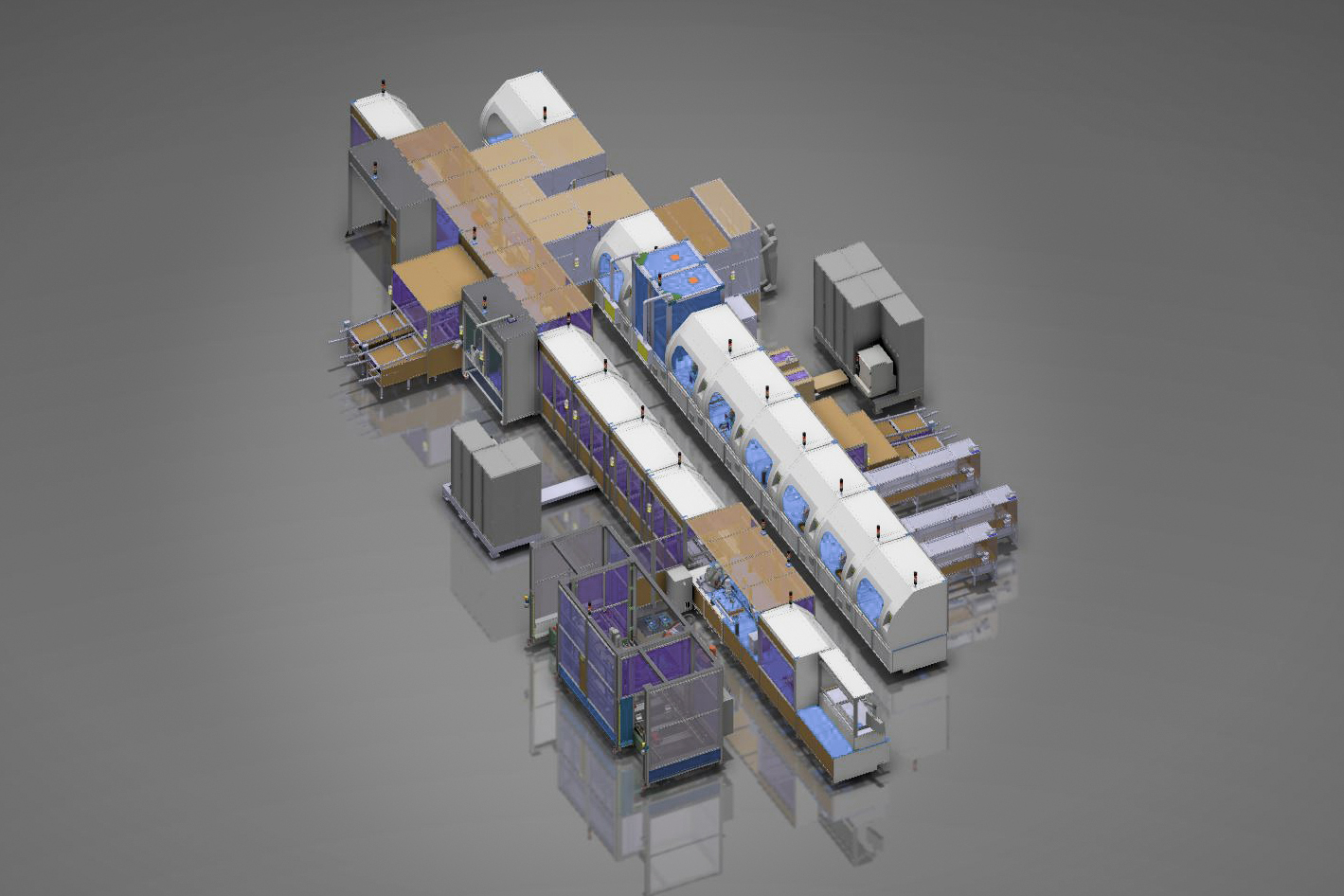
In our technical news series "Module Assembly," we address the challenges and optimization potential of automated battery system production. assemble the complete battery module Numerous pre-assembly processes are necessary connecting the individual battery cells . Depending on the vehicle design and OEM requirements, there are different cell arrangements to accommodate the available space in the vehicle; parallel or series connection is possible. The cells are assembled into single or double modules and are suitable for use in the energy storage systems of hybrid vehicles (HEV/PHEV), in battery electric vehicles (BEV), or in non-automotive applications.
Module assembly - PART 3 | The cell contacting system: from the pre-assembly process to integration into the battery module
The pre-assembly of the cell contacting system
The Pre-assembly of the cell contacting system is highly automated on upstream production lines. The pre-assembly lines are either directly connected to the final assembly of the battery modules or designed as an independent system component. Depending on the concept, after the automatic feeding of cell connectors and current taps, the base bodies of the cell contact system are equipped with voltage taps and temperature sensors. The transfer of the pre-assembled cell connectors into the cell contact system carrier part takes place automatically. Ultrasonic or hot riveting processes offer the optimal solution for joining the carrier parts, which serve to protect the cell connectors and complete the individual components into the finished cell contact system. After component marking for traceability, the production data is sent to the MES (Mmanufacturing Eexecution Ssystem) transferred and the cell contacting systems were output from the system.
Integration of the cell contacting system into the battery module
The integration of the pre-assembly line for cell contacting systems with battery assembly is implemented differently depending on the production concept. Automated guided vehicles (AGVs) are suitable for autonomously connecting the system sections. Output into trays or pallets is also possible; alternatively, the cell contacting systems are transferred directly to the downstream module assembly via buffer sections. In the welding cell of the battery module assembly line, the cell connectors are fixed to the cell terminals using clamping masks, ensuring the zero gap required for the process. Subsequently, the Pre-assembled ZKS connected to the terminals of the cell stack by laser welding processes. In addition, depending on the component design, voltage taps are provided for later connection of the CSC (Cell SSupervision Ccircuits) welded.
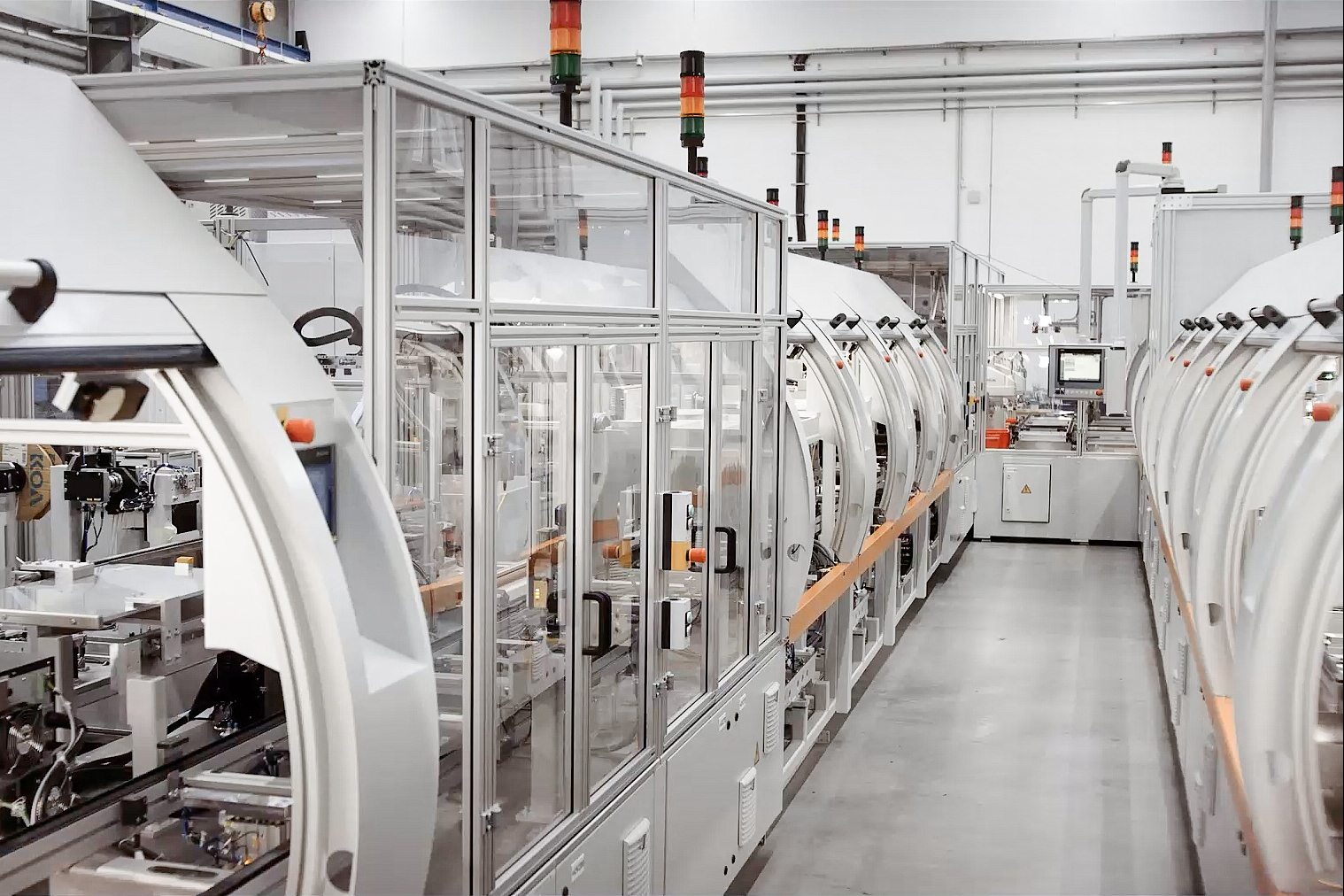 Intelligent data management for tracing production data
To meet the requirements for process and component safety of the sensitive components, a intelligent data management including traceability Integrated. Complete data acquisition and process monitoring take place during production. Thus, a Part traceability of safety-relevant individual parts. This data is transmitted to a higher-level production control system at the customer's plant.
More parts from the news series "Module Assembly"
- Module assembly - PART 1 | Preparation processes for battery assembly from prismatic cells
- Module assembly - PART 2 | Stacking and Welding: High demands on process reliability and quality
- Module assembly - PART 4 | End-of-line tests guarantee correct processing during the production of battery modules.

 +49 851 95584-0
 info@ake-technologies.de
 Adolf-Hoellinger-Straße 3, D-94034 Passau-Patriching